- Who lives here: certified room systems and video bars running Microsoft Teams Rooms or Zoom Rooms.
- Cost: a per-room, per-year license on top of the hardware.
- Clients: one ecosystem by default. Joining the other platform's meeting is a cut-down guest experience.
- Sharing: built around starting a call, so everyone in the room stares at their own laptop instead of collaborating.
- The catch: fine until the org signs a second platform. Then every locked room is a renovation.
BYOD, BYOM, or BY: where does your meeting live?
Two questions classify every hybrid meeting room ever built: where is the meeting hosted, and whether the room is locked to one meeting client or open to them all.
The three hybrid models
What is a hybrid meeting?
A hybrid meeting is one where in-room and remote participants meet as equals. Mersive views hybrid meetings in three different models:
- BYOD (bring your own device): you share your screen and the VTC client to the room display. The in-room participants do not access room peripherals such as cameras, speakers, and microphone.
- BYOM (bring your own meeting): the room’s camera and mic join the call. The meeting client can be hosted on your laptop or on the pod.
- BY (bring yourself): the room hosts the meeting and carries its own control surface, a touch panel in the room, so participants join, start and run meetings without bringing anything at all.
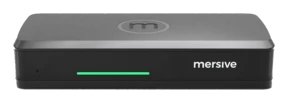
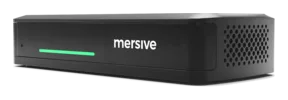
Polaris Link hosts it on the Polaris Pro hardware, taking the memory and power load off your laptop. The laptop stays in the room either way, because it is still the control surface for starting, running and ending the meeting.
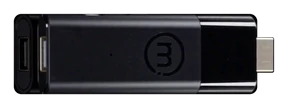
Polaris Host, paired with a Pro or Essentials, does it without the lock-in: the native Teams, Zoom, Webex or Meet client, chosen per meeting and switched in seconds.
cablewireless to Polarismeeting host✕not in the meeting
The market map
The room-system market at a glance.
The rows are the three hosting models. The columns split the market by platform support: rooms locked to a single meeting client on the left, rooms that work with every client on the right.
Platform-locked
Platform-agnostic
BYBring yourselfThe room hosts the meeting AND carries the control surface: a touch panel in the room lets participants join, start and run the meeting with full use of the room's peripherals, bringing nothing at all.
Microsoft Teams Rooms, Zoom Rooms
One room, every client
- Who lives here: a small set of multi-platform room systems, including dongle-plus-base bundles.
- Cost: room-system pricing, and sometimes two devices to buy and manage per room.
- Clients: most either re-render the meeting in their own client, losing native features such as chat and Copilot, or run Teams and Zoom on two separate compute surfaces, the base unit and the dongle.
- The catch: two surfaces means firmware version drift and two OAuth identity contexts per room, and still no Google Meet and the rest.
- Polaris Host moves seamlessly from Teams to Zoom to Google Meet and any other VTC client, retaining native features such as chat.
- One compute surface and one identity per room, at a fraction of the cost of the other systems capable of this.
- The in-room touch panel is the control surface, so participants join, start and run meetings bringing nothing at all.
BYOMBring your own meetingThe room's peripherals (camera, microphone) are captured and used in the meeting. The meeting itself can be hosted by the user's laptop or by the room device, the Polaris pod. Either way, participants still bring a device to start, control and end the meeting: the control surface is what separates BYOM from BY.
Certified bars in USB mode
- Who lives here: the major certified-bar vendors.
- Cost: good hardware, open in theory, priced to pull the room toward one ecosystem's certified mode.
- Clients: any, because the laptop hosts and controls the call. The bar is its USB peripheral.
- Wireless: none. BYOM here is a USB-C cable across the table.
Wireless, and done fully
- Who lives here: the wireless BYOM vendors.
- Cost: the room device, plus in most cases a transmitter per room or per laptop.
- Clients: the room's camera, mic and display join the call already running on your laptop, whichever platform it is.
- Wireless: yes, with a catch each. A transmitter in the laptop, a web client instead of the platform's own, or release notes conceding multi-view is unavailable during a BYOM session.
- Polaris Link bridges the room into the Teams, Zoom, Webex or Meet call natively, over the air, with no transmitter and no web client.
- Any hardware: the USB camera, mic or soundbar you already own plugs into the pod and works.
- Multi-user, and the multi-share workspace stays live while the call runs.
- When the meeting should leave the laptop entirely, the same pod moves up a row to BY.
BYODBring your own deviceYou share your screen to the room display, and what it shows is usually your VTC client itself. You get none of the room's peripherals: no wall camera, no room microphone. The laptop's own webcam and mic carry the call.
Ecosystem casting
- Who lives here: the platform vendors' own casting paths, Teams Cast and AirPlay-only rooms.
- Cost: effectively zero, it comes with the ecosystem.
- Clients and devices: one vendor's world. Guests and mixed fleets break it.
- Sharing: one mirrored screen at a time.
Everyone connects; the workspace is the split
- Who lives here: everyone. AirPlay, Miracast, Google Cast and vendor apps are table stakes, and nobody wins on the connection any more.
- Cost: from free dongles to per-room devices.
- Clients and devices: broad, because mirroring a screen needs no meeting client at all.
- Sharing: a mirrored screen that has to carry everything at once. Cross-network, the one rival that documents a cloud path shares in and views individual streams.
- The display is a workspace: up to 10 live sources composited side by side, joined from the browser with nothing to install.
- The room chooses what lives where: the call on the big screen with content on everyone's devices, or the content up and the call on your laptop.
- The workspace crosses networks in both directions, and the full composited workspace streams back to every remote browser. None we know of returns the room's whole workspace.
Where Polaris stands
BYOD is table stakes. Everyone can put a screen on the display, but for a hybrid meeting it has a ceiling, because the call runs on someone's laptop with its webcam and its mic, so the room ends up staring at laptops instead of each other.
BYOM fixes that, and most vendors sell it with strings attached, usually an add-on subscription and a short list of compatible hardware. Polaris Link carries no list. It works with every meeting client, and because the pod runs a full Linux operating system, standard USB video and audio class peripherals (UVC/UAC) work by default. The camera you already own plugs in and works, with no certified-peripherals program required.
BY removes the requirement for a user device. The room system hosts the meeting, carries the control surface; and that control surface is what separates it from BYOM. Even with Polaris Link hosting the call on the pod, participants still bring a laptop to start, control and end the meeting; a BY room has a touch panel that does all of it from the room itself. Today the BY experience is largely served by certified room systems that lock the room to one platform, at that platform's price. Polaris Host is built to match that experience at a lower price and without the lock. Every client is the vendor's own, chosen per meeting, and your AV and IT teams pick the peripherals that fit the space and the budget rather than the certification list.
Each competitor gives something up along the way, whether a transmitter in the laptop, a re-rendered client that drops chat, or a Teams Rooms license on hardware certified for nothing else
✓ BYOD · every client✓ BYOM · every client✓ BY · every client, with Polaris Host (Shipping Q4 2026)
Mini-glossary: the vocabulary this page teaches
BYODBring your own device: you share pixels to the display; the meeting stays on your laptop.BYOMBring your own meeting: your call, with the room's camera and mic bridged in.BYBring yourself: the room hosts the meeting and its touch panel is the control surface, so with full use of the room's peripherals a meeting runs with no user device in the room at all.
See the platform live.
Hardware trials ship for every product, direct from Mersive. When the rooms prove it, we introduce your regional partner for the rollout.
Start a trial Watch on YouTube ↗